I was sixteen years old when I saw the full page newspaper ad for a new movie about to be released. The ad was a great piece of artwork. It created a desire in me to see this movie as soon as possible, which surprised me because I had seen a couple of production artwork storyboards a few months earlier in a magazine which did not impress me at all. The movie? Why “Star Wars“, of course. The only movie to really make an impact on my life.

I saw the movie for the first time at the Paramount Theater in St. Cloud, Minnesota. The Paramount had the largest screen of any theater in central Minnesota in the summer of 1977. I will never forget the feeling of watching the seemingly endless star destroyer flying across the scene in the opening shots of the film. It was awesome! I had never seen anything like this before.

I was totally enthralled by the story, the characters, and the special effects. In less then two hours I had become a Star Wars fan for life. I had become a Star Wars geek.

It did not take long before the collecting began. I started with newspaper ads and articles. It soon expanded to comic books, toys, and action figures, as my spending money would allow. I have amassed quite a collection over the last thirty years. It dominates three rooms of my house and contains over 500 action figures, countless other toys, and a lifesize statue of Anakin Skywalker in podracer gear. I have seen the original movie over 11 times in the theater and countless times on video and television.

What do the Boy Scouts of my troop think about my Star Wars collection? Most of them think it is cool. Several think I am weird. A couple probably think I need need treatment. All in all though, it has been great to share my Star Wars experience with them. It gives us a common subject to relate to outside of Scouting. When it comes to Star Wars I will always be that sixteen year old awestruck teenager.

Just how obsessive about this movie am I? On a scale of 1 to 10, I would give myself a six. Yes, I do have a large collection of Star Wars memorabilia. However, I do not know all the words to every Star Wars movie. Nor do I dress up like the characters when I go to theaters to see the movies.

A fan of Star Wars? Definitely! But I am more a fan of Boy Scouting. Scouting takes much more time in my life, and more dedication. While I may have more materials things relating to Star Wars, Scouting is the thing that is closer to my heart.

May the force be with us all… in Scouting.
If you have been a Boy Scout leader for any length of time then you have probably given your troop a “lesson in stupidity” at least once, whether you wanted to or not. It is inevitable.

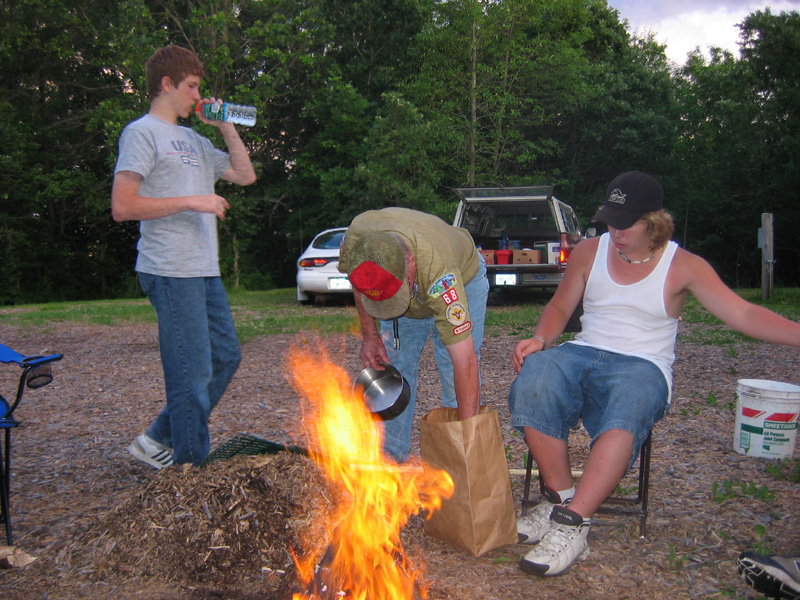
In the previous blog I wrote about one of the lessons in stupidity I gave to the troop about ten years ago. Recently, during a cooking demonstration at a troop meeting, I gave the boys another unplanned lesson.

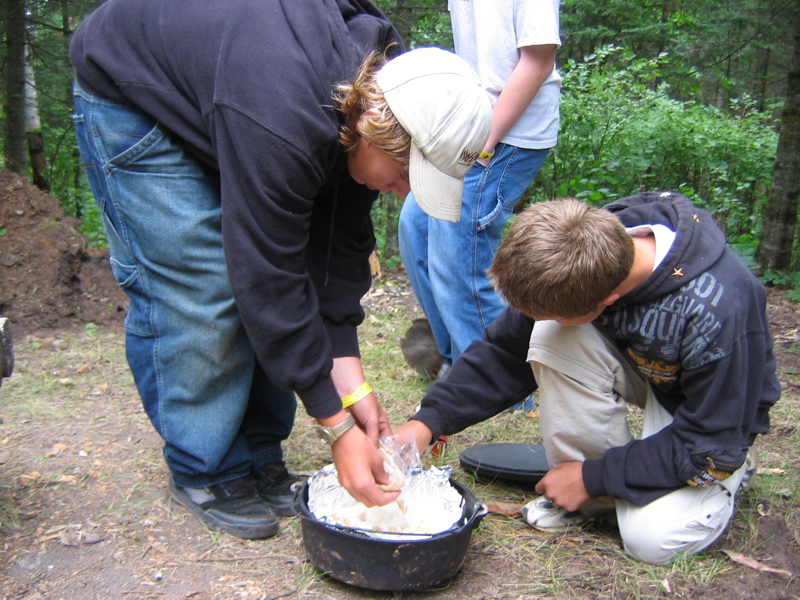
The demonstration involved making an apple cobbler using a dutch oven. After lining the oven with tin foil and adding the ingredients, we placed the oven in the campfire ring. One Scout began using a shovel to place coals on top of the oven, but just placing one or two coals at a time. This one-sy two-sy thing was too slow for me. (Impatience is the number one cause of lessons in stupidity.)

The shovel being used was the type that had a ring that could be loosened to change the angle of the shovel blade to the handle. I decided it would be quicker to have the blade at a ninety degree angle to the handle for moving the coals so I asked the Scout if I could have the shovel for a moment. I unscrewed the ring, and even though I had just watched him moving hot coals with the shovel, I grabbed the blade to change it’s angle, and immediately let go of it as I discovered how hot it had become.

D’oh! Ouch!

I could have slapped my forehead for being so stupid, but I was already in enough pain. I ended up with a nice big blister on my index finger of the right hand, and a small blister on another finger. Needless to say, I was extra careful during the rest of the meeting. So were the Scouts.

I sometimes think that we Scout Leaders need to give these “lessons in stupidity” to remind ourselves that we are not the almighty know-it-all leader of the troop. These lessons humble us. After all, we are mere humans. We feel pain. And we do stupid things once in a while.

Have you given any “lessons in stupidity” lately?

Anyone who has been a Scout Leader for awhile will have a few stories about Scouts acting without thinking about the consequences. I like to use some of these incidents as lessons for Scouts in later years, sometimes changing the names a bit to protect the innocent.

Of course, we as scoutmasters, and other Scout leaders, can be just as careless at times. We will get impatient and do some really stupid things in front of the boys of the troop. I am no different. I have done a few stupid things myself. I like to take the stories of these incidents and turn them into “lessons in stupidity”.

One of these lessons happened nearly ten years ago when the troop was camping near Duluth, Minnesota. It had been a busy Saturday so everyone was looking forward to relaxing around the campfire in the evening, both Scouts and parents. Unfortunately, the wood was a bit damp and did not want to keep burning. (Do you see where this is going?)

I did not see any flames in the fire ring, although there was a little smoke rising from the wood. I grabbed the can of white gas that we used in the stoves, told the Boy Scouts to never, ever do what I was about to do, and poured a little gas on the fire. After all, there was no flames, you know.

Well, there must have been a few hot coals buried in the wood pile because as soon as the white gas hit the wood I found myself engulfed in a fireball of flame to the astonishment of the Scouts and the concern of the parents. Luckily for me, it was a short lived blast, not quite hot enough to start my clothing on fire or burn my skin. It did singe my eyebrows though. I looked at all the blank stares from the boys sitting around the fire and replied, “That is why you never put gas on a fire!”

I was very lucky to escape injury from that lesson in stupidity. It has become a story I tell the new boys whenever we discuss fire safety. Troop alumni still like to tease me about that incident.

Last night during our troop meeting I gave the boys a new lesson in stupidity, but that story will have to wait until a future blog entry.

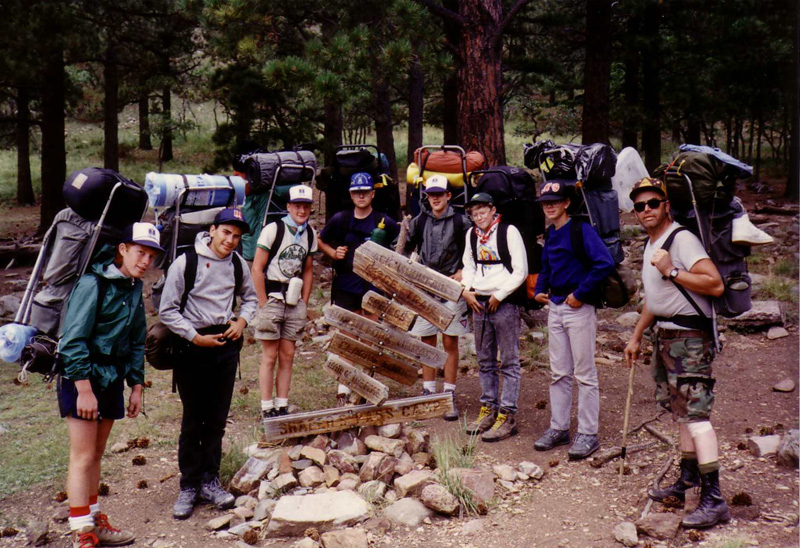
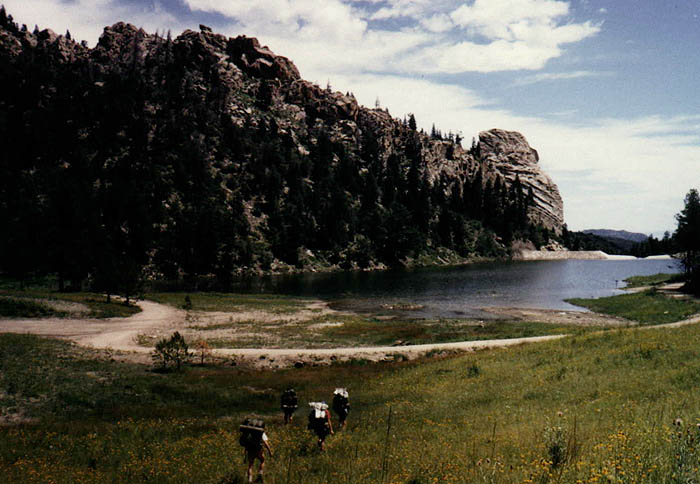
The Boy Scouts of Troop 68 went to Philmont Scout Ranch the first time in 1986. They enjoyed the adventure so well that plans were made to attend the ranch again in 1989. Seven Scouts and two adults from the Melrose troop would attend the second trip. One of the Scouts and one of the adults of this crew would be making their second trek.

I am not going to write about this trip very much with this blog entry. However, if you would like to see several dozen pictures of what Philmont was like in 1989 you can check out the troop’s photo galleries of the trip by clicking here.

As we did for the 1986 trip, we put together a slide show for the parents and others troop members, which was later turned into a video. This video becomes today’s entry to the Melrose Scouting Productions Podcast. The script was written by one of the Scouts, and it was narrated by a few of the crew members. Let us know how you enjoy it by leaving a comment.

Watch (download) the video by clicking HERE.

The Boy Scouts of Melrose Troop 68 participated in a trek at Philmont Scout Ranch for the first time in 1986. I like taking a lot of photographs when I am out with the Scouts so I came home with over 200 pictures ready to be developed. I also wanted the parents and families to see what we did while we were on the Philmont trip so I wrote a script and used many of the pictures in a slide show, complete with narration and music.

Shortly after the trip, I also started taping Scouting activities and producing video programs for the local cable access television station. It did not take long before I turned the slide show into a video for the station. It was crude, being a video of an actual slide show, but it got the show on the air.

Years later I would have a computer capable of re-editing the program and making the production look much better. I scanned the pictures of the trip into the computer and re-made the program, keeping the soundtrack but replacing all the video with clearer pictures. I was now able to add more photographs. I was also able to pan across the photos, and zoom in and out of them. The program became a lot more fun to much and looked much more professional then the video of the slide show.

This entry to the Melrose Scouting Productions Podcast lets you download and view this reconstructed production. It presents a trip into the past of Philmont Scout Ranch, and our troop’s first, but not last trip, to this Scouting paradise.
Watch Video
.

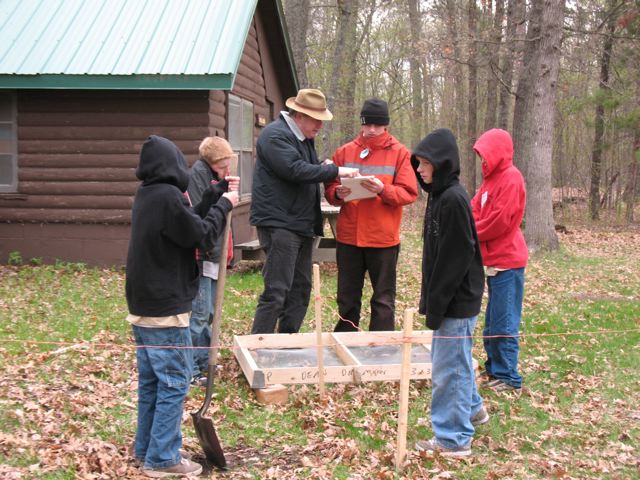
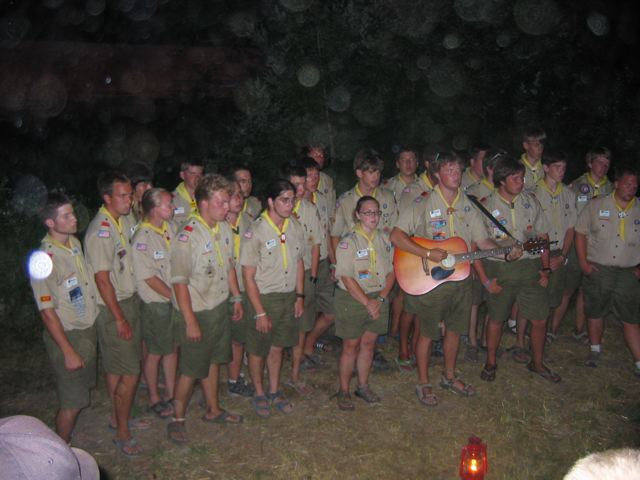
Last weekend the Boy Scouts of Troop 68 joined the Scouts of eight other troops at our council’s camp, Parker Scout Reservation. They did not gather for a council or district event. These troops came together to provide their Scouts an opportunity to work on various merit badges. The eighty-seven Scouts were given the chance to work on up to four of the eighteen merit badges offered during the outing which lasted from Friday night to Sunday afternoon. The simpler merit badges were offered during the evening hours. The tougher merit badges were done through the morning and afternoon sessions. The councilors were provided by the troops who attended.

The merit badge subjects included quite a variety of topics. There were some Eagle required badges including First Aid, Communications, and the Citizenship awards. Other subjects included badges not usually found at summer camps. These included Auto Mechanics, Electricity, and Computers. The boys even had a chance to earn rarely earned badges such as Archeology, Chemistry, and Textile.

Nine Boy Scouts from Troop 68 attended the weekend. The boys realized this was a “work” weekend instead of a “fun” weekend. They knew it was a chance to earn merit badges and get a jump on their advancement. Each of the boys completed two, three, or four merit badges. Only a few partials were brought home.

The weather did not provide us with a nice sunny, warm weekend. (See the previous blog entry.) Luckily, the buildings around camp were reserved for the weekend. All except the Auto Mechanics and Archeology merit badges were able to be done indoors.

This was the second year that Troop 68 participated in this program. The boys enjoyed the classes and were thankful for the opportunities. The troop and I would like to thank John Chance for organizing the outing, the Cold Spring Venture Crew and other staff members, and the sixteen merit badge councilors who gave up their weekend to work with the Scouts. Thanks to everyone who helped, the nine Scouts from Melrose earned a total of 30 merit badges.

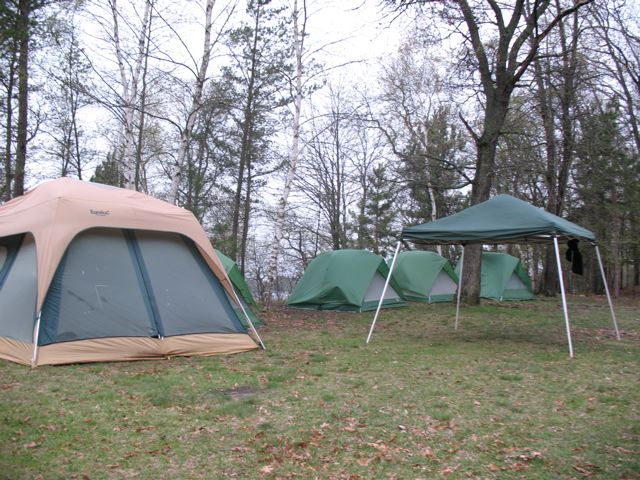
Boy Scout Troop 68 began using Eureka tents in the late 1980’s. We began using the Alpine Meadows four man tents until Eureka discontinued making that model. Then we moved on to that popular model with Scout troops known as the Timberline. Along the way we also bought a few little two man backpacking tents.

We have had very good luck with the Eureka tent line. Yes, they cost a bit more then some other brands out there but the Eurekas are made with good quality materials. The tents have survived a lot of Boy Scout camping abuse. The main problem we have had is boys losing the aluminum stakes that come with the tents.

We have discovered a few tips for taking care of tents over the years. For example, when camping in grazing woodlands keep the cattle away from the campsite. Make sure the boys do not play football or other ball games next to the tents. Do not erect tents downwind and near campfire rings. Pack and store tents after they are completely dry, and not when they are soaking wet.

Last weekend was the troop’s first camping trip of the new year. When we arrived at Parker Scout Reservation we had to set up the tents in a light rain, which did not make the Scouts very happy. Did I mention that we were camping on the side of the lake receiving the full strength of gale force winds?

For thirty-eight hours the tents were pounded by winds averaging twenty to thirty miles per hour, with gusts in the fifty to sixty miles per hour range. We staked the tents down with larger stakes then the ones that came with the tents, and even moved them Saturday morning so we could try blocking the wind with our cars and pickups. There were times during the evening hours while laying in our sleeping bags that we thought the tents would come down around our heads. The tent files flapped so fast and loudly it was tough to fall asleep.

When it came time to pack the tents Sunday morning we were glad the tents were Eureka. All the tents were still standing. They had done their job of providing us shelter during the rain and wind storms. However, almost every tent had received some sort of damage. A few pole assemblies were bowed beyond repair. Several rings found at the corners of the tents were stretched and would need to be replaced. Surprisingly, the tent fabric held up fine and did not rip. Only the metal portions of the tents received any damage.

This week I will have to go online and find the replacement parts from somewhere, and then find the time to pull the tents apart and start the repair work. That sounds like a good job for the quartermasters to help with. Now, where did I put the troop’s credit card?

Sometimes I think that we as Scouting leaders need to be reminded about the goals and aims of the Boy Scouts of America. I know I do once in a while. I found the following on the BSA website and thought it might be a good idea for us all to read it and remind ourselves why the Scouting program is such a great program.

* * * * * * * * * * * * * * * * * * *
Aims and Methods of the Scouting Program

The Scouting program has three specific objectives, commonly referred to as the “Aims of Scouting.” They are character development, citizenship training, and personal fitness. The methods by which the aims are achieved are listed below in random order to emphasize the equal importance of each.

Ideals. The ideals of Boy Scouting are spelled out in the Scout Oath, the Scout Law, the Scout motto, and the Scout slogan. The Boy Scout measures himself against these ideals and continually tries to improve. The goals are high, and as he reaches for them, he has some control over what and who he becomes.

Patrols. The patrol method gives Boy Scouts an experience in group living and participating citizenship. It places responsibility on young shoulders and teaches boys how to accept it. The patrol method allows Scouts to interact in small groups where members can easily relate to each other. These small groups determine troop activities through elected representatives.

Outdoor Programs. Boy Scouting is designed to take place outdoors. It is in the outdoor setting that Scouts share responsibilities and learn to live with one another. In the outdoors the skills and activities practiced at troop meetings come alive with purpose. Being close to nature helps Boy Scouts gain an appreciation for the beauty of the world around us. The outdoors is the laboratory in which Boy Scouts learn ecology and practice conservation of nature’s resources.

Advancement. Boy Scouting provides a series of surmountable obstacles and steps in overcoming them through the advancement method. The Boy Scout plans his advancement and progresses at his own pace as he meets each challenge. The Boy Scout is rewarded for each achievement, which helps him gain self-confidence. The steps in the advancement system help a Boy Scout grow in self-reliance and in the ability to help others.

Associations With Adults. Boys learn a great deal by watching how adults conduct themselves. Scout leaders can be positive role models for the members of the troop. In many cases a Scoutmaster who is willing to listen to boys, encourage them, and take a sincere interest in them can make a profound difference in their lives.

Personal Growth. As Boy Scouts plan their activities and progress toward their goals, they experience personal growth. The Good Turn concept is a major part of the personal growth method of Boy Scouting. Boys grow as they participate in community service projects and do Good Turns for others. Probably no device is as successful in developing a basis for personal growth as the daily Good Turn. The religious emblems program also is a large part of the personal growth method. Frequent personal conferences with his Scoutmaster help each Boy Scout to determine his growth toward Scouting’s aims.

Leadership Development. The Boy Scout program encourages boys to learn and practice leadership skills. Every Boy Scout has the opportunity to participate in both shared and total leadership situations. Understanding the concepts of leadership helps a boy accept the leadership role of others and guides him toward the citizenship aim of Scouting.

Uniform. The uniform makes the Boy Scout troop visible as a force for good and creates a positive youth image in the community. Boy Scouting is an action program, and wearing the uniform is an action that shows each Boy Scout’s commitment to the aims and purposes of Scouting. The uniform gives the Boy Scout identity in a world brotherhood of youth who believe in the same ideals. The uniform is practical attire for Boy Scout activities and provides a way for Boy Scouts to wear the badges that show what they have accomplished.